Sub-Total: $0.00
Background
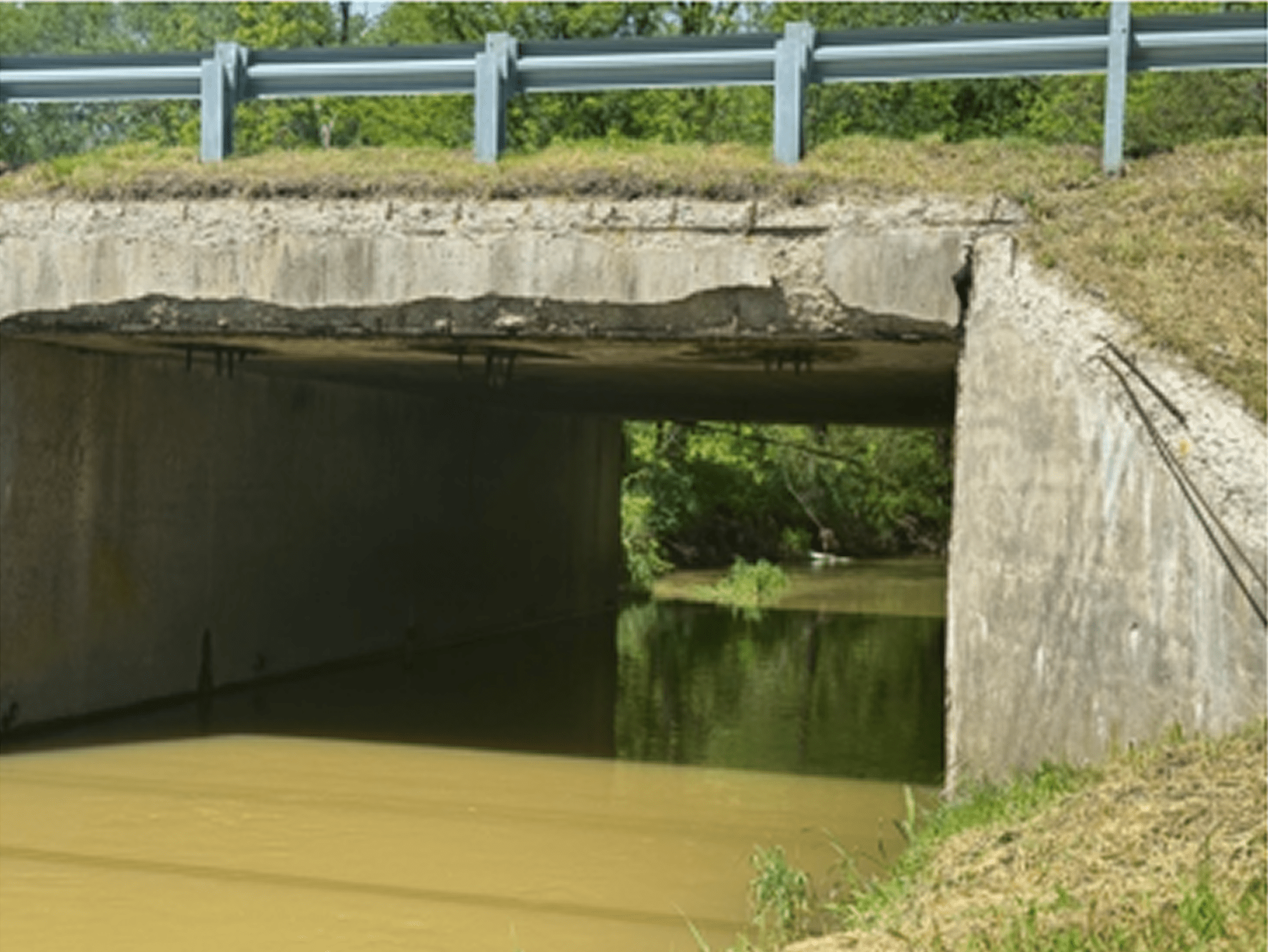
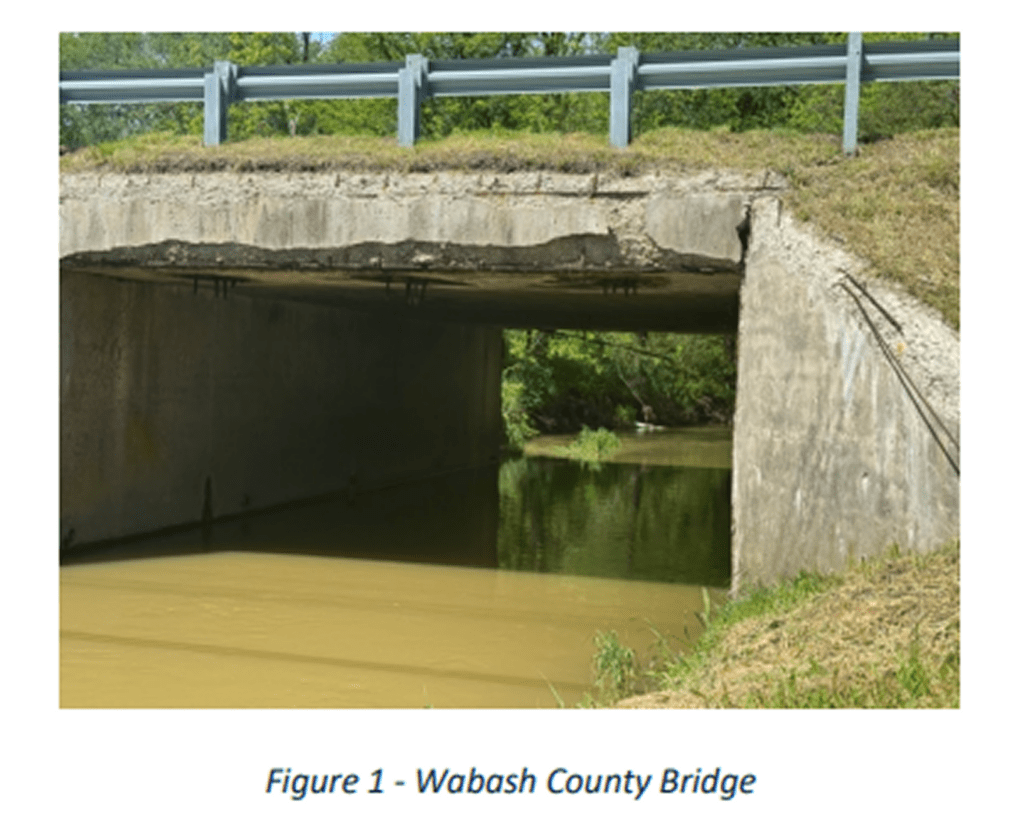
The concrete bridge, built in 1913 in Wabash County, Indiana, faced critical structural and safety concerns due to extensive deterioration. Over time, the structure experienced severe environmental wear and tear, including repeated freeze-thaw cycles and prolonged exposure to road salts. This resulted in widespread cracking, spalling, and, in many areas, the detachment of reinforcing steel. The bridge’s load-bearing capacity was compromised, limiting the weight of vehicles that could safely cross it, and leading to growing safety concerns for local vehicular traffic.
Faced with the challenge of saving this vital piece of infrastructure, it was imperative to deploy innovative solutions that not only repaired the damage but also extended the bridge’s lifespan while minimizing downtime.
Challenges at a Glance
• Severe Cracking & Spalling: Cracks and surface spalling penetrated deep into the concrete, risking further degradation.
• Exposed Reinforcement: With the reinforcing steel visibly corroding and detaching, the bridge’s structural integrity had reached a critical point.
• Environmental Toll: Freeze-thaw cycles and salt exposure accelerated damage, making future degradation likely without protective measures.
• Limited Load Rating: The bridge could not accommodate the needs of heavy vehicles and posed growing risks to traffic safety.
Innovative Solutions Applied
Colloidal Silica-Based Healing Agent
A colloidal silica-based healing solution, DENSYGEL, was employed to act as a “concrete antibiotic” capable of penetrating deep into the micro-cracks. This revolutionary technology allowed the concrete to heal itself by promoting chemical reactions that repaired internal voids and resealed the structure. Key benefits of DENSYGEL included improving bonding in the aggregate-cement interface and enhancing wear resistance.
Key Outcomes of DENSYGEL
• Reduction in mass loss from abrasion wear by over 15% (ASTM D4060 test results).
• Strengthened bond and increased surface durability, eliminating visible irregularities.
• Enhanced uniformity and mechanical resilience of the concrete surface.
High-Performance Concrete Polyurea Layer
The bridge was further protected with a high-performance polyurea material called ArmorX. Applied as a durable, elastic coating, it served as a long-term “bandage†for the repaired concrete. ArmorX, with its remarkable 500% elongation and a tensile strength of 7,000 psi, provided exceptional durability and a flexible barrier to environmental elements like moisture, salts, and temperature fluctuations. For aesthetic harmony, ArmorX could be pigmented to seamlessly match the original surface and conceal previous damage.
Key Attributes of ArmorX
• Long-term resistance to environmental factors such as moisture and freeze-thaw cycles.
• Exceptional tensile strength to protect the structural integrity of the bridge.
• Customizable appearance to match the original bridge design.
Results
The application of these technologies proved to be a major success, as evidenced by thorough evaluations. The repair not only stabilized the structural integrity of the bridge but also significantly extended its lifecycle, saving the county from the costly and disruptive alternative of full bridge replacement.
Performance Improvements Achieved
• Enhanced Durability: The application of DENSYGEL addressed internal micro-cracking and abrasion, offering a tough and uniform surface with superior wear resistance.
• Improved Load-Bearing Capacity: By protecting and reinforcing the structure, the bridge regains its load capacity, accommodating both light and heavy vehicles.
• Aesthetic and Functional Restoration: The combined use of DENSYGEL and ArmorX restored the bridge to a visually pleasing and operational state.
• Environmental Resilience: The protective functional layer of ArmorX ensures safeguard against future environmental damage, providing peace of mind.
Impact
This innovative repair project highlighted how combining advanced technologies such as colloidal silica-based healing agents and high-performance polyurea solutions can address complex infrastructure challenges. For Wabash County, this approach achieved the following outcomes:
• Cost-Effective Solution: Prevented the need for high-cost replacement while extending the service life of the bridge.
• Minimized Disruption: Enabled in-service repair, allowing traffic flow to resume quickly with minimal downtime.
• Reduced material waste by opting for a long-lasting repair solution over demolition and rebuilding.
This project serves as an inspiring model for municipalities and engineering firms seeking efficient, durable, and innovative solutions to protect and restore critical infrastructure.
Closing Words
The successful repair of the Wabash County bridge is a testament to the power of cutting-edge technologies in modern infrastructure maintenance. DENSYGEL and ArmorX not only addressed immediate structural challenges but also demonstrated their long-term value in improving concrete durability and environmental resilience.
Across the country, aging infrastructure is a growing concern. Solutions like these are paving the way (literally and figuratively) for safer, more resilient communities. If your project requires reliable and innovative concrete repair solutions, get in touch today to explore how these advanced technologies can transform and future-proof your structures.
Tags: