Sub-Total: $0.00
Silica vs. Silicate
Why colloidal silica delivers better short- and long-term performance for concrete infrastructure.
Surface-focused treatments can harden the top layer, but they do not always address the internal pathways driving deterioration. EDYSTON uses colloidal silica technology to penetrate deeper, densify the matrix, and improve durability in aging bridge decks, pavements, parking structures, and other concrete assets.
Silica vs. Silicate
Why colloidal silica delivers better short- and long-term performance
Silicate



Colloidal Silica



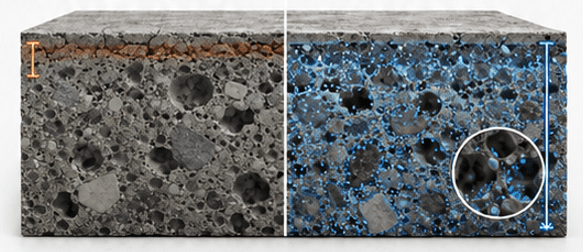
Treat the concrete from within.

Designed for DOT Infrastructure

Lifecycle Cost Focused

Condition-Based Maintenance

Bridge Decks . Pavements . Structures
Deeper Penetration
Treats pores, cracks, and voids
beyond the surface zone.
Internal Densification
Reduces permeability and supports improved durability performance.
Asset Life Extension
Helps maintenance teams reduce recurring repairs and delay replacement.
Why Decision-Makers Choose Colloidal Silica
| Factor | Traditional Silicate | EDYSTON Colloidal Silica |
|---|---|---|
| Penetration | Shallow treatment zone | Deeper penetration into the concrete matrix |
| Primary Action | Surface-focused reaction | Internal treatment of pores and cracks |
| Durability Strategy | Near-surface hardening | Longer-term internal improvement |
| Best Use | Sound concrete needing surface hardening | Aging, cracked, or porous concrete |
| Value | Lower initial cost | Better lifecycle value |
Built for Owners Who Manage Risk, Budget, and Service Life

Civil Engineers
Specify treatment strategies that align with durability and service-life goals.

DOT Asset Managers
Support preservation planning with technologies that target lifecycle cost and asset condition.

Maintenance Supervisors
Address moisture ingress, scaling, and deterioration before repairs become replacements.